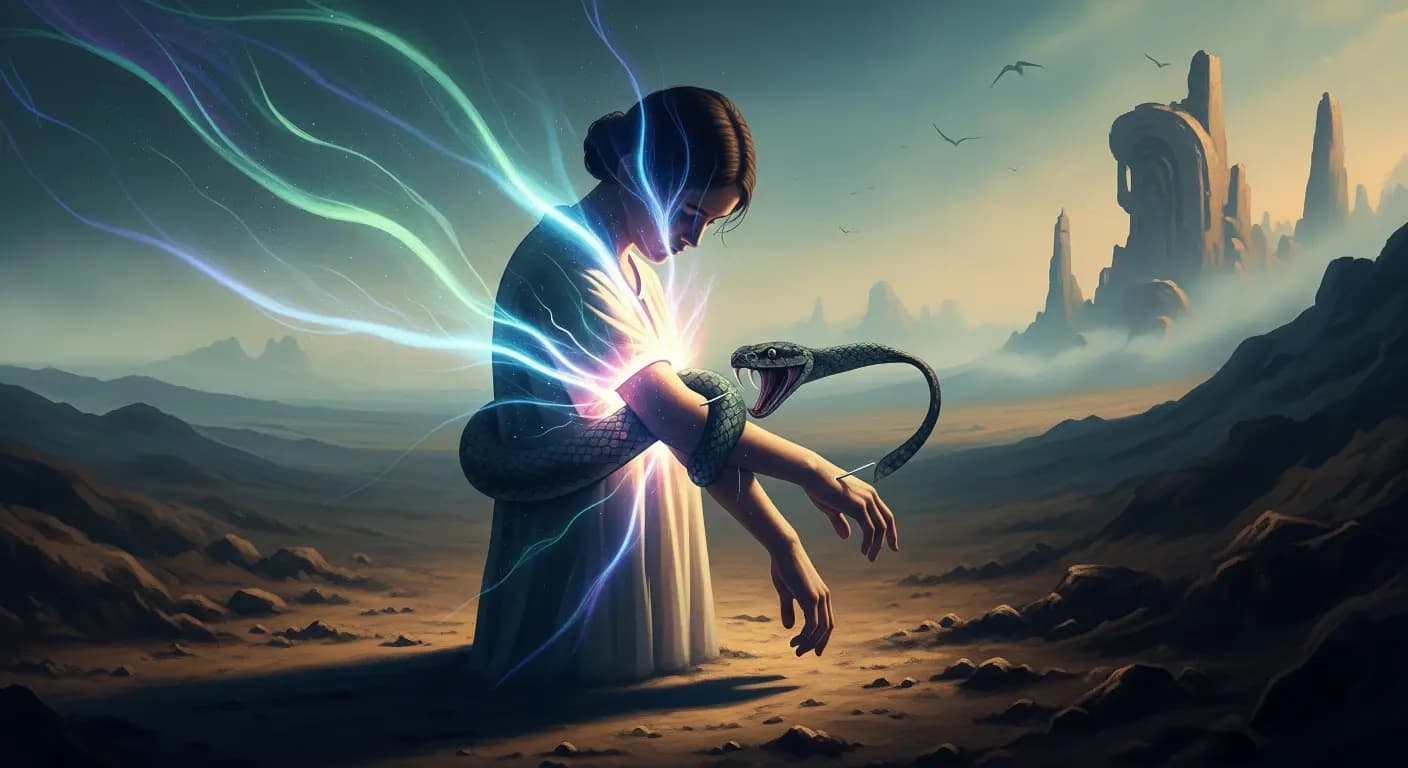
Dreams involving jinn or spirits occupy a unique place in Islamic thought. They are neither quickly dismissed as imagination nor treated with the kind of credulous fear that makes people unable to think clearly. Instead, the classical Islamic tradition approaches these dreams with the same careful, structured methodology it applies to all significant visions: examining the details, considering the dreamer's life situation, and arriving at an interpretation that is both spiritually grounded and practically useful.
If you have dreamed of a jinn — whether it appeared threatening or friendly, whether it spoke to you or simply made its presence felt — understanding what the Islamic tradition says about these dreams can be deeply clarifying. And understanding what modern psychology adds to the picture can help you see the full dimension of what your sleeping mind was communicating.
Jinn in the Islamic Worldview: Why These Dreams Are Taken Seriously
Any discussion of dreaming about jinn must begin with the Islamic understanding of what jinn actually are. Jinn are not fairy-tale creatures or fictional monsters. In the Quran, they are a real category of created being — made from smokeless fire, as the Quran states in Surah Al-Rahman (55:15) — who exist alongside human beings but in a different mode of existence. An entire chapter of the Quran, Surah Al-Jinn (chapter 72), is devoted to the jinn who heard the Quran recited and responded to it with faith.
The Quran also makes clear that Shaytan (Satan) is himself a jinn — a fact stated explicitly in Surah Al-Kahf (18:50). This means that the category of jinn encompasses both those who are aligned with good and those who are agents of harm and misguidance. It is not a monolithic category, but one with the same kind of moral differentiation that exists among humans.
This theological grounding is important because it shapes how Islamic dream interpretation handles jinn in visions. A jinn appearing in a dream is not automatically a bad sign, nor automatically a good one. Its nature, behaviour, and the emotions it evokes in the dreamer are all significant factors in determining what the dream is communicating.
The Classical Framework: Ibn Sirin's Tradition on Jinn Dreams
Muhammad ibn Sirin (654–728 CE), whose tradition forms the backbone of classical Islamic dream interpretation, left detailed guidance on the appearance of jinn in dreams. His framework considers several key variables.
A friendly or calm jinn. When a jinn appears in a dream as benign — not threatening, perhaps even helpful or guiding — the classical tradition often reads this as a sign of hidden help or protection arriving in the dreamer's life. Something is operating in the dreamer's favour behind the scenes, in a way they may not yet be able to see. This might be a person who is quietly advocating for them, a situation that is developing positively without their awareness, or a sense that they are protected from a harm they do not yet know about.
A hostile or threatening jinn. When the jinn in a dream is menacing, aggressive, or terrifying, the classical interpretation shifts. Ibn Sirin's tradition points toward an enemy who operates in secret — someone in the dreamer's life who is deceptive, whose hostility is hidden rather than open. A hostile jinn in a dream can also represent fear of the unseen: anxiety about threats that have no clear face, worries about hidden forces working against the dreamer's interests. This is a dream worth taking seriously — not with panic, but with heightened awareness.
Being chased by a jinn. This variant is particularly vivid and often deeply disturbing. Classical interpreters read it as pointing to fear of the unknown or anxiety about hidden threats — the dreamer is running from something they cannot see clearly or name. In the practical language of life, this might translate to a situation at work, in a relationship, or in a community where the dreamer senses danger but cannot identify its source. The dream urges attentiveness.
Speaking with a jinn and gaining knowledge. When the dreamer has a conversation with a jinn in a dream — and comes away with new information, insights, or answers — the classical tradition takes a nuanced position. Knowledge gained from a jinn in a dream is interpreted as insight coming from an unexpected source. This might be an unusual person in the dreamer's waking life who provides valuable information, or an insight that arrives in an unexpected way. The dream does not endorse the jinn as a source of spiritual guidance — Islam is clear that guidance comes from Allah through His revelation — but it can point to the arrival of useful knowledge from an unconventional quarter.
Al-Nabulsi's Perspective: The Shape-Shifting Element
Abd al-Ghani al-Nabulsi (1641–1731 CE), in his extensive work on Islamic dream interpretation, added an important dimension to the understanding of jinn dreams: the significance of how the jinn appears visually.
If the jinn in a dream appears in human form — looking like a person, dressing like a person, speaking like a person — al-Nabulsi reads this as a sign of deception from someone close to the dreamer. A person in their life is presenting a human face but operating with a different nature underneath: concealing something important, misrepresenting themselves, or being fundamentally dishonest in the relationship.
If the jinn appears in a more overtly supernatural or threatening form, al-Nabulsi reads this as a threat from a less hidden direction — someone whose hostility is not fully concealed, or a situation that carries real danger that the dreamer needs to address.
This distinction between the jinn that looks human and the jinn that looks supernatural is practically important: the former calls for careful discernment about who in the dreamer's life might not be who they present themselves to be.
The Spiritual Response: What Islam Recommends
Dreams involving jinn — particularly troubling ones — carry a clear spiritual response in Islamic practice. This is not about fear but about the principled use of protection that the tradition provides.
The Quran contains specific verses of protection that are recommended for recitation both before sleep and in response to disturbing dreams. Ayat al-Kursi (2:255) is described in hadith as having the power to protect the believer from jinn through the night. The last two chapters of the Quran — Surah Al-Falaq (113) and Surah Al-Nas (114), together called Al-Mu'awwidhatain — are specifically revealed as protection against hidden evils, whispers, and harmful forces. The Prophet Muhammad (peace be upon him) is reported to have recited these chapters every night before sleep, as narrated in the collections of Bukhari and Abu Dawud.
Beyond specific recitations, the general practice of dhikr — the remembrance of Allah through phrases of glorification, thanks, and prayer — is considered a powerful spiritual protection. A person who fills their day with remembrance of Allah and ends their night with the appropriate du'a and Quranic recitation is understood to be under divine protection in a way that extends into the state of sleep.
If a person wakes from a nightmare involving jinn, the Prophetic guidance is clear: turn to your left and spit gently three times, seek refuge in Allah from Shaytan and from the evil of the dream, and do not discuss the dream with others in a way that gives it power or spreads anxiety.
The Shadow Side: Shaytan's Role in Dreams
It is important in any discussion of jinn dreams to be clear about one theological point. The Prophet (peace be upon him) taught that Shaytan sends disturbing dreams to distress and confuse the believer. This means that not every jinn dream is a meaningful vision to be decoded — some are simply Shaytan's attempt to unsettle the dreamer, to create fear, or to implant obsessive thoughts.
The way to distinguish between a meaningful dream and Shaytan's interference is largely through the character of the dream: does it carry a coherent message consistent with Islamic values? Does it leave the dreamer with a sense of clarity after reflection? Or does it simply create fear, obsession, and confusion with no useful content?
Disturbing jinn dreams that leave the dreamer feeling terrorised, confused about their faith, or unable to think clearly are best treated as Shaytan's interference rather than meaningful visions. The appropriate response is the spiritual practice described above, followed by turning one's attention firmly back to Allah and away from the dream.
The Psychological Dimension: The Unconscious Speaks in Symbols
Modern psychology — particularly the depth psychology developed by Carl Jung and his followers — offers a complementary framework that many people find useful alongside the Islamic interpretive tradition.
In Jungian terms, the jinn or spirit figure in a dream is often an expression of what Jung called the "shadow" — the parts of the self that remain unconscious, unacknowledged, or suppressed. The shadow is not necessarily evil; it is simply the part of the self that has been pushed out of conscious awareness. When the shadow appears in dreams, it often comes in the form of a mysterious, strange, or threatening figure — something that does not belong to the dreamer's comfortable self-image but that demands attention.
A threatening jinn in a dream might, in this framework, represent suppressed anger, hidden fears, denied aspects of one's character, or unresolved conflicts that the conscious mind has been avoiding. The dream is not predicting an encounter with a supernatural entity; it is asking the dreamer to turn and face something within themselves that they have been running from.
A friendly jinn in a dream might, correspondingly, represent untapped potential — capacities, insights, or strengths that the dreamer has not yet claimed as their own.
These psychological readings and the classical Islamic readings are not mutually exclusive. The Islamic tradition has always understood that dreams can come from multiple sources simultaneously — from Allah, from one's own psyche, or from Shaytan — and that careful discernment is required to understand which voice is speaking in any given dream.
Hidden Fears and Hidden Blessings
One of the most useful things to hold onto when reflecting on a dream involving jinn is the classical emphasis on the hidden dimension. Jinn in Islamic cosmology are beings of the unseen world — they operate out of ordinary human sight. When they appear in dreams, the classical tradition consistently points to what is hidden in the dreamer's waking life: hidden friends, hidden enemies, hidden dangers, hidden gifts.
This is worth sitting with. What in your current life is operating beneath the surface? Where might there be people or situations that are not presenting themselves honestly? Are there blessings you are receiving that you have not yet recognised? Are there threats you sense but cannot see clearly?
The jinn dream, in this way, is an invitation to pay attention to the unseen dimensions of your situation — not with paranoia, but with the attentiveness that allows someone to navigate their life with greater wisdom.
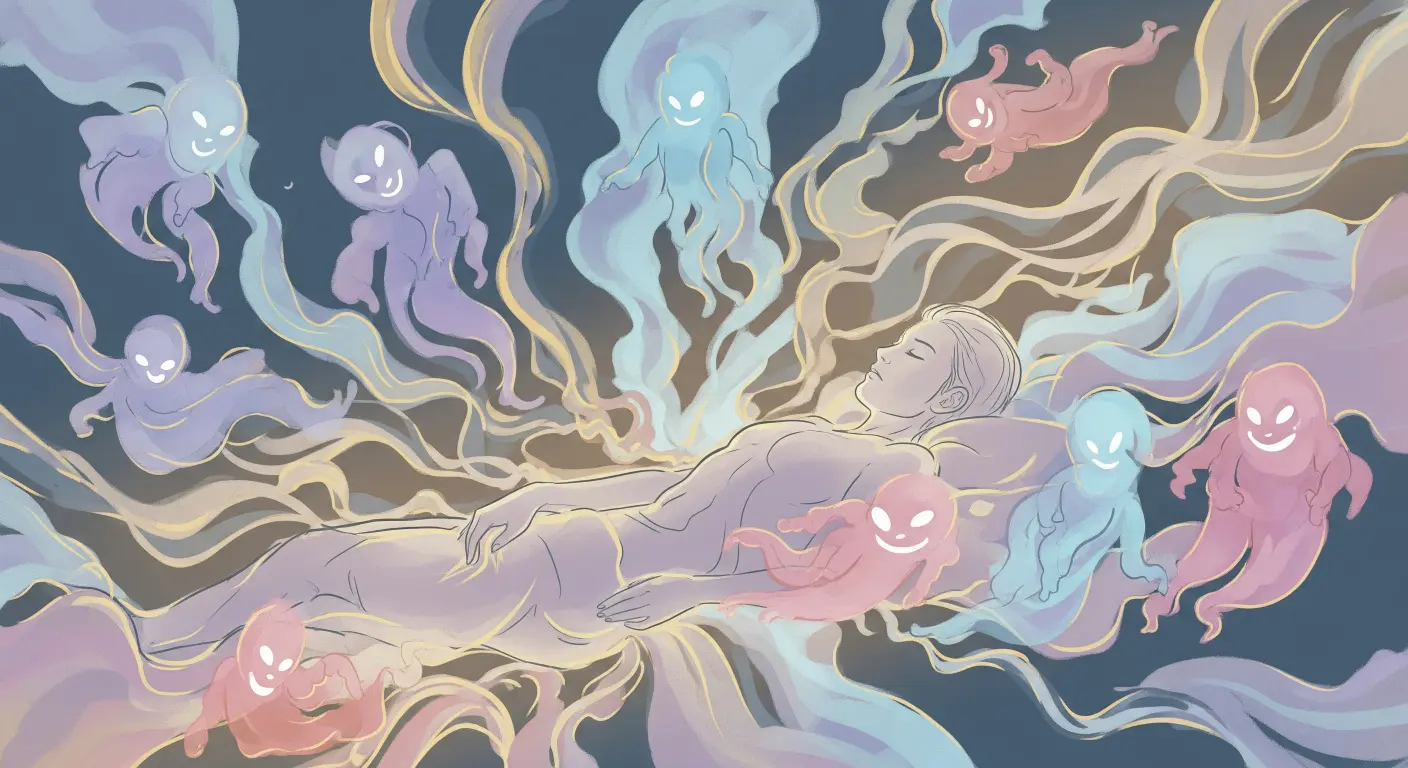
Frequently Asked Questions
What does it mean to dream of a jinn in Islam? In Islamic dream interpretation, the meaning depends significantly on the nature of the jinn and the dreamer's emotional experience in the dream. A friendly or calm jinn often indicates hidden help or protection — something working in the dreamer's favour behind the scenes. A hostile jinn points to a hidden enemy or secret threat. Speaking with a jinn and gaining knowledge suggests insight arriving from an unexpected source. The classical tradition reads jinn in dreams primarily as markers of what is hidden in the dreamer's waking reality.
Is it bad to dream about spirits? Not necessarily. The classical Islamic tradition does not assign a uniformly negative meaning to spirits or jinn in dreams. The nature of the encounter, the emotional register of the dream, and the details of what occurs all matter enormously. A dream involving a benign spiritual presence may carry a very different message from one involving threat or terror. What matters is engaging thoughtfully with the dream rather than reacting with either dismissal or unexamined fear.
How do I protect myself from jinn in dreams? The Islamic tradition recommends a consistent practice before sleep: reciting Ayat al-Kursi (2:255), Surah Al-Falaq (113), and Surah Al-Nas (114). These are narrated in hadith as powerful protections for the night. Performing ablution (wudu) before sleep and ensuring that one has ended the day in a state of dhikr and remembrance of Allah also provides spiritual protection. If a disturbing dream occurs, seeking refuge in Allah upon waking and performing voluntary prayer is the recommended response.
What should I recite if I see jinn in my dream? Upon waking from a dream involving jinn — especially a disturbing one — the Prophetic guidance is to turn to the left, spit lightly three times, and say "A'udhu billahi min ash-shaytani ar-rajim" (I seek refuge in Allah from the accursed Shaytan). Reciting Ayat al-Kursi and the last two chapters of the Quran (Al-Falaq and Al-Nas) is also recommended. Beyond that, making du'a and remaining in a state of remembrance of Allah throughout the day will help ground the dreamer spiritually.
Can a dream about jinn be a good sign? Yes, according to the classical Islamic tradition. A friendly jinn, a jinn who gives something to the dreamer, or a jinn who conveys useful knowledge can all carry positive interpretations — hidden help, unexpected blessings, or insight from an unconventional source. The tradition does not cast all jinn dreams as warnings; it reads them with the same nuance it applies to all significant dreams.
You Might Also Like
- Why Do I See Unknown People in My Dreams?
- Why Do I See Dead Relatives in My Dreams?
- Snake Dream Meaning — Islamic Interpretation
- Snake Bite in a Dream — Islamic Meaning
- Being Chased in a Dream — Islamic and Psychological Meaning
- Recurring Dreams — What They Mean and Why They Return
- What is the Meaning of Seeing Your Own Death in a Dream?
- Lion in a Dream — What Does It Mean?
- Prayer and Spirituality Dreams
- People in Dreams — Browse All Articles