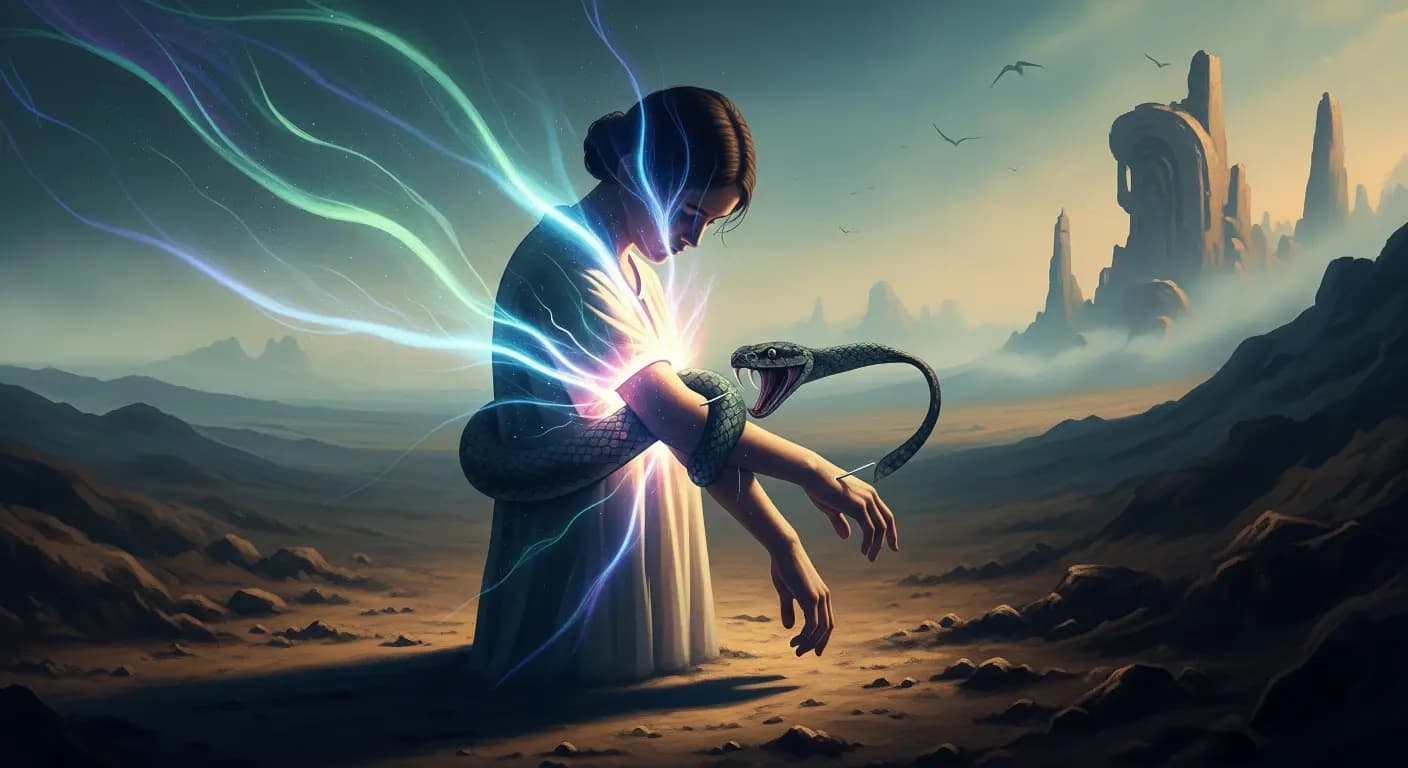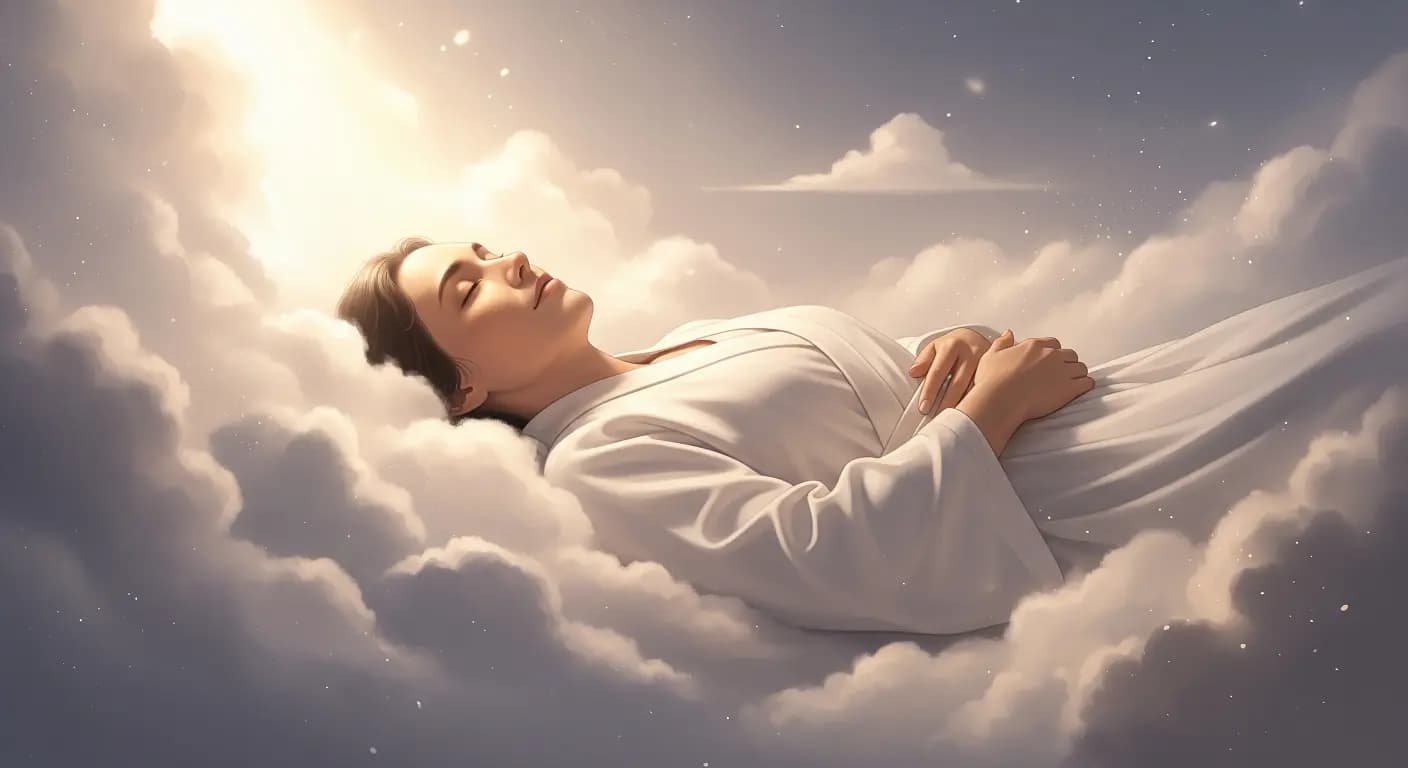
Few dreams are as startling as the one in which you watch yourself die. You may see your own body from above, attend your own funeral, or feel the strange silence of your own passing — and then you wake up, heart pounding, wondering what on earth your mind was trying to tell you. This dream is far more common than most people realise, and across centuries and cultures it has been one of the most studied and debated visions in the art of dream interpretation.
The good news — and Islamic scholarship has always maintained this — is that dreaming of your own death is almost never a literal prediction. What it represents is something far more interesting: transformation, endings, renewal, and the deep reckoning that comes when life is demanding something different of you.
The Islamic Framework for Understanding Death in Dreams
In Islamic tradition, dreams occupy a serious and respected place. The Prophet Muhammad (peace be upon him) taught that dreams come in three types: a true vision (ru'ya) that is a glad tiding from Allah, a disturbing dream that comes from Shaytan, and a dream that is simply the wandering of one's own thoughts — both of these latter types being reported in the collections of Bukhari and Muslim. True visions are considered among the last remaining forms of good news for the believer.
Classical Islamic scholars developed an entire science around dream interpretation, and the question of one's own death in a dream was one they addressed with notable nuance. The tradition attributed to Ibn Sirin — Muhammad ibn Sirin (654–728 CE), the most celebrated dream interpreter in Islamic history — draws a clear distinction between the physical event of dying and what death symbolises in the language of dreams. According to this tradition, death in a dream is the language of transformation, not a prophecy.
This distinction matters enormously. When a scholar of Ibn Sirin's era interpreted a dream of death, he was asking: what in this person's life is ending? What is being left behind? What major shift is underway?
What Dying in a Dream Means: Classical Islamic Interpretations
The classical tradition offers several specific interpretations depending on the form the death takes in the dream. Understanding these distinctions can be the difference between unnecessary dread and genuine spiritual insight.
Dying peacefully and being prepared for burial. In the classical tradition, this is often interpreted as a sign of a major life transition that will ultimately bring peace. The dreamer may be leaving behind a difficult chapter — a troubled relationship, a period of sin, a phase of hardship — and moving toward something new. The calm in the dream reflects the calm that awaits on the other side of the change.
Being buried. Scholars in the tradition of Ibn Sirin noted that seeing oneself buried — laid in a grave and covered with earth — could indicate imprisonment, prolonged illness, or a period of feeling completely stuck and constrained. The burial symbolises being confined, cut off from one's normal life and movement.
Dying and then coming back to life. This is among the most positive variations of this dream. In the classical framework, dying and then returning to life in a dream is strongly associated with repentance — a spiritual death to sin and a rebirth in faith and righteousness. It may also represent a literal recovery from illness, or the end of a crisis followed by a new beginning. The pattern mirrors the Quranic understanding of spiritual renewal, where the believer turns back to Allah and finds themselves reborn in faith.
Seeing the funeral prayer (salat al-janazah) performed over oneself. This particular vision carries a surprising interpretation in classical Islamic scholarship: rather than being ominous, it is often read as a sign of honour and respect from the community. The funeral prayer is an act of communal love and supplication — to see it performed over oneself may indicate that the dreamer will attain a position of dignity and be well regarded by those around them.
Al-Nabulsi's perspective. Abd al-Ghani al-Nabulsi (1641–1731 CE), whose encyclopaedic work Ta'tir al-Anam remains a landmark of Islamic dream interpretation, noted that seeing one's own death in a dream can indicate the end of worry and the onset of ease. He also emphasised that such a dream may signal a dramatic change in circumstances — the old self, the old situation, the old burden — coming to an end, making room for something new.
When the Dream Carries a Warning Note
Not every death dream signals positive transformation, and classical scholars were careful not to over-romanticise these visions. If the dream is accompanied by genuine distress, fear, and none of the positive indicators described above — no resurrection, no peaceful burial, no community gathering — it may be a call to spiritual self-examination. This is especially the case if the dreamer has been neglecting prayer, drifting from their faith, or engaged in behaviour they know to be harmful.
In such cases, the dream functions less as a prophecy and more as a mirror. The soul during sleep, in the Islamic understanding, is partially released from the body — the Quran speaks of Allah taking souls during sleep (39:42) — and this partial release can bring a clarity that the busy waking mind drowns out. A deeply unsettling death dream with no positive resolution may be that clarity speaking: a prompt to return to worship, to seek forgiveness, to reconsider one's path.
The remedy advised by classical scholars is the same in almost every troubling dream: seek refuge in Allah from Shaytan, make istighfar (seek forgiveness), offer two units of voluntary prayer, and do not dwell on the dream obsessively or share it widely with others.
The Dream Changes Meaning With the Dreamer
One of the most important principles in Islamic dream interpretation — and one that is sometimes overlooked — is that the same dream image means different things depending on who is having it. The scholar, the sinner, the young person, the elderly, the one in crisis and the one in ease: each brings a different context to the same symbol.
A person who has been seriously ill and dreams of their own death followed by a peaceful burial may receive that dream as a message of recovery and ease. A person who has been neglecting their religious obligations and has the same dream may receive it as a wake-up call. A person on the verge of a major life decision may receive it as confirmation that one chapter is genuinely closing. Context is everything, and this is why classical scholars would ask a great deal about the dreamer's life before offering any interpretation.
Psychological Perspectives: The Western Understanding of Death Dreams
While Islamic tradition provides a deeply spiritual lens, modern psychology offers its own insights that complement rather than contradict the classical view.
Carl Jung, whose work on the symbolism of the unconscious remains influential, saw death in dreams as a reliable symbol of transformation — not physical death, but the death of an old self. The ego, he observed, resists change with extraordinary force; the unconscious sometimes has to resort to the most dramatic imagery available to communicate that a change is not optional but necessary. Death in a dream, in the Jungian view, is the unconscious saying: the old you can no longer continue.
Contemporary therapists and researchers in dream science note that death dreams are particularly common at major life transitions: leaving one's homeland, ending a long relationship, changing careers, losing a parent, approaching a milestone birthday. These are moments when the self is genuinely being restructured, and the dream world reflects that restructuring through its most powerful available symbol.
Fear of mortality — the underlying awareness that one's life is finite — also surfaces in death dreams, particularly in people going through health scares or experiencing the loss of people close to them. In this reading, the dream is not about transformation at all but about the honest reckoning with impermanence that most people spend their waking lives avoiding.
Both readings are valid, and often a single dream contains elements of both: the fear of change and the invitation to embrace it.
What to Do After This Dream
In Islamic practice, the advice for any disturbing dream is clear and consistent. Upon waking, turn to your left and spit gently three times (a practice narrated in hadith). Seek refuge in Allah from Shaytan and from the evil of what you saw. Do not tell the dream to anyone you fear might interpret it negatively. Offer voluntary prayer if you are able to. Then reflect thoughtfully on your life — not with anxiety, but with honesty.
Beyond the specific religious practice, there is real value in sitting with the question the dream raises. What chapter of your life might actually be ending? What aspect of who you used to be no longer serves you? What burden, habit, or relationship might need to be released? Death dreams, properly understood, are not enemies. They are, in the language of the Islamic tradition, ru'ya — visions — that arrive to wake us up, not to frighten us to death.
Context, Symbols, and Details to Note
When trying to understand a death dream, the following elements are worth reflecting on carefully:
The emotional register of the dream. Did you feel peaceful, frightened, resigned, or relieved? The emotional tone often reveals more than the visual content. A peaceful death in a dream almost always carries a gentler meaning than a violent or terrifying one.
What followed the death. Did you wake immediately, or did the dream continue? If you came back to life, if you saw light, if others mourned you with love — these are all significant details that shape the interpretation.
What was happening in your life before the dream. Were you at a crossroads? Under unusual stress? In a period of spiritual neglect? Of creative stagnation? The dream does not occur in isolation; it is always in conversation with your waking reality.
Whether the dream recurs. A single death dream is one thing; a recurring death dream is your inner world demanding sustained attention. If the same dream or variations of it keep returning, it is worth taking more seriously — whether through prayer and reflection, journaling, or speaking with someone you trust.
A Word on Literal Interpretation
It needs to be said clearly, because anxiety can make people leap to the worst conclusion: Islamic scholarship does not support the idea that dreaming of one's own death is a prophecy of imminent physical death. Ibn Sirin's tradition is explicit on this point. Dreams are written in symbol and metaphor, not in the plain language of newspaper headlines. The tradition even notes that if death were as literally predictable as some people fear, the science of dream interpretation would not exist — there would be nothing to interpret.
This does not mean every death dream is positive or should be ignored. It means that the first response should be reflection and spiritual attentiveness, not panic.
Frequently Asked Questions
Does dreaming of your own death mean you will die? No. In Islamic scholarship and in modern dream research, there is no evidence that dreaming of one's own death predicts actual death. The classical tradition is clear that death in dreams operates as a symbol, not a prophecy. It most commonly points to transformation, major change, the end of a difficult period, or a call to spiritual renewal.
What does dying in a dream mean in Islam? According to the tradition of Islamic dream interpretation, dying in a dream typically indicates a major life transition. It can mean repentance and spiritual renewal, the end of a difficult chapter, a change in social status or circumstances, or — if accompanied by being buried — a period of constraint or illness. The specific meaning depends heavily on the details of the dream and the life situation of the dreamer.
What if you see your own funeral in a dream? Classical Islamic interpretation often reads the funeral prayer being performed over oneself as a sign of honour and respect from the community. It reflects the dreamer being well regarded and prayed for by those around them. The more distressing or chaotic the funeral appears, the more the dream shifts toward a warning of hardship ahead.
What does it mean to come back to life in a dream? Dying and then returning to life is one of the most positive variations of this dream in the Islamic interpretive tradition. It is most commonly associated with repentance and spiritual renewal — a symbolic death to sin or bad habits, followed by a genuine rebirth in faith and purpose. It can also indicate recovery from illness or the resolution of a crisis after a period of great difficulty.
Should I tell someone about this dream? Islamic guidance on disturbing dreams recommends not telling them to people who might interpret them negatively or cause you greater anxiety. If the dream is deeply troubling, sharing it with a person of knowledge, a trusted scholar, or a wise elder is appropriate. Beyond that, the practice is to seek refuge in Allah, offer prayer, and not dwell on it.
You Might Also Like
- Why Do I See Dead Relatives in My Dreams?
- Being Chased in a Dream — Islamic and Psychological Meaning
- Falling in a Dream — What It Means
- What Does It Mean to Dream About Being Pregnant?
- Recurring Dreams and What They Are Trying to Tell You
- What Does It Mean to Dream About Marriage?
- Snake Bite in a Dream — Islamic Meaning
- Losing Teeth in a Dream — Meaning and Interpretation
- Death Dreams — Browse All Articles
- Jinn and Spirits in Dreams